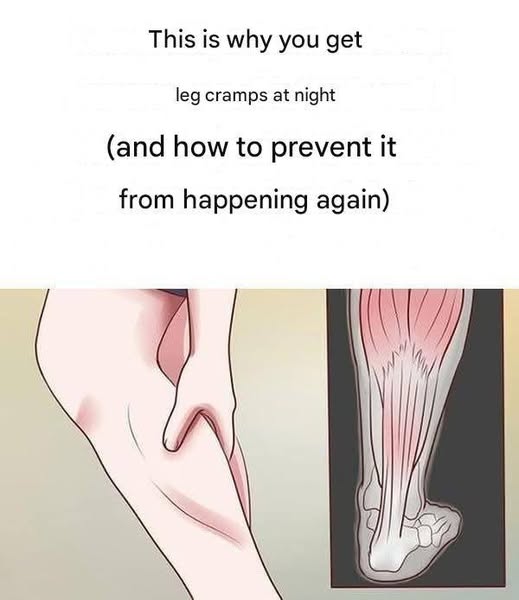
Waking up in the middle of the night with a sharp, painful cramp in your calf or foot can be startling and frustrating. These nighttime leg cramps—also called nocturnal leg cramps—are surprisingly common, especially in adults over 50. Here’s why they happen and what you can do to prevent them.
Common Causes of Nighttime Leg Cramps
Dehydration
Not drinking enough water during the day can lead to electrolyte imbalances, which increase the risk of muscle cramps at night.
Mineral Deficiencies
Low levels of potassium, magnesium, or calcium can make your muscles more prone to cramping.
Muscle Fatigue or Overuse
Standing for long hours, intense exercise, or overworking your leg muscles can trigger cramps while your body is at rest.
Poor Circulation
Reduced blood flow in the legs, sometimes due to sitting in the same position for too long, can contribute to nighttime cramps.
Medication Side Effects
Some medications, including diuretics, statins, and certain blood pressure drugs, may increase the risk of leg cramps.
Underlying Health Conditions
Diabetes, thyroid disorders, and nerve-related issues can sometimes lead to frequent leg cramps.
How to Prevent Nighttime Leg Cramps
Stretch Before Bed
Simple calf and hamstring stretches before going to sleep can relax your muscles and reduce cramping.
Stay Hydrated
Drink enough water throughout the day, especially if you’re active or live in a hot climate.
Maintain a Balanced Diet
