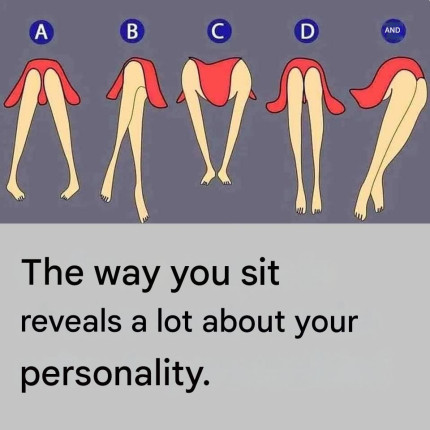
this sounds like a personality posture analysis! The idea is that the way you naturally sit, stand, or hold your body can reflect aspects of your character, mood, or mindset. Here’s a breakdown of five common postures and what they might reveal about you:
1. Arms Crossed, Legs Crossed (Closed, Defensive Posture)
What it reveals: You may be cautious, reserved, or protective of your personal space. This posture often shows someone who is thoughtful and possibly a bit introverted.
Tip: Try opening up your posture in social settings to encourage more approachable energy.
2. Leaning Back, Hands Behind Head (Relaxed, Confident Posture)
What it reveals: You exude confidence and self-assurance. This posture is often adopted by people who feel in control and comfortable in their environment.
Tip: Be mindful — in some contexts, it can be perceived as overconfident or dismissive.
3. Forward Lean, Elbows on Knees (Engaged, Attentive Posture)
What it reveals: You are highly focused, curious, and actively engaged in the present moment. This posture indicates interest and eagerness to participate.
Tip: Maintain eye contact and a relaxed facial expression to balance intensity with approachability.
4. Legs Stretched Out, Arms Loose at Sides (Open, Relaxed Posture)
What it reveals: You are open-minded, laid-back, and approachable. This posture reflects comfort with your surroundings and a stress-free attitude.
Tip: In professional settings, make sure your posture doesn’t come across as too casual or inattentive.
5. Standing Tall, Shoulders Back, Chin Up (Power/Authority Posture)
What it reveals: You project confidence, leadership, and decisiveness. People with this posture are often seen as assertive and self-reliant.
Tip: Pair with a relaxed stance to avoid appearing rigid or intimidating.
Key Insight: Your natural posture can give subtle clues about your confidence, openness, and emotional state. Becoming aware of it helps you communicate more effectively and manage how others perceive you.
