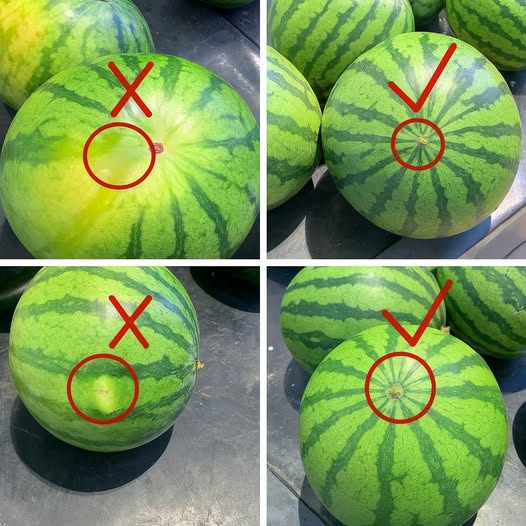
1. Look for the Field Spot
What it is: The creamy yellow patch on the watermelon’s skin.
Why it matters: This spot shows where the melon rested on the ground and ripened in the sun. A deep, buttery yellow usually means the fruit is ripe and sweet.
2. Check the Skin
Avoid: Watermelons with shiny or glossy skin—they may be under-ripe.
Look for: A dull, matte finish with uniform stripes or color patterns.
3. Tap and Listen
How: Gently tap the watermelon with your knuckles.
What to hear: A deep, hollow sound indicates ripeness, while a dull sound may mean it’s overripe or underripe.
4. Check the Shape
