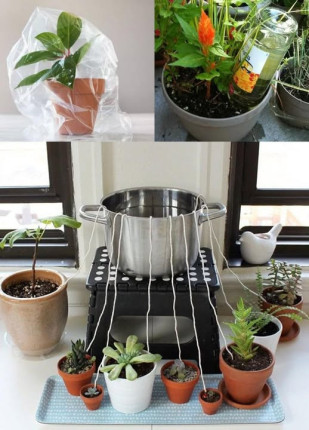
Fill a plastic bottle with water.
Attach a self-watering stake or DIY with a skewer and cotton wick.
Insert the stake into the soil.
Water will slowly seep into the soil over several days.
2. DIY Wick System
Place one end of a cotton string in a water container and the other end in the plant’s soil.
Capillary action will draw water into the soil gradually.
3. Watering Globes or Spikes
Fill a glass globe or commercial spike with water.
Insert into the soil near plant roots.
They release water slowly, perfect for small plants.
4. Plastic Bottle Drip
Poke a few holes in the cap of a small plastic bottle.
Fill the bottle with water, invert it, and insert into the soil.
The water drips slowly over time.
5. Sponge Method
Place a damp sponge or towel in the plant pot under the plant.
Water slowly releases from the sponge into the soil, keeping it moist.
6. Shallow Tray & Capillary Mat
Place plants on a tray filled with water.
Use a capillary mat or allow pots to sit in water for a slow soak.
Ideal for multiple potted plants.
7. Self-Watering Pots
Use pots with built-in water reservoirs.
Fill the reservoir before leaving; plants will drink as needed.
8. Neighbor or Friend Check-In
Ask a neighbor or friend to water your plants during your absence.
Provide clear instructions on how much water each plant needs.
Tips & Variations
