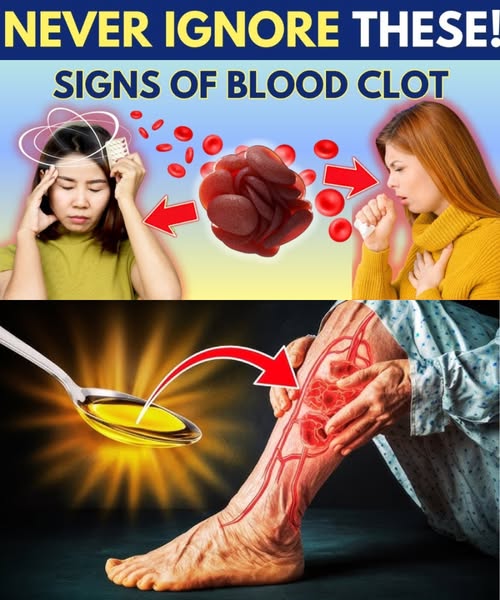
If a clot travels to the lungs (pulmonary embolism), it can cause sudden shortness of breath.
May occur with or without chest pain.
6. Chest Pain or Pressure
Sharp or stabbing pain, especially when taking deep breaths, may signal a clot in the lungs.
This is a medical emergency.
7. Rapid Heartbeat or Lightheadedness
A fast heartbeat, dizziness, or fainting may indicate the clot is affecting blood flow to the lungs.
Seek urgent care immediately.
8. Unexplained Coughing or Coughing Up Blood
A sudden cough, sometimes with blood, can be a sign of a pulmonary embolism.
This is life-threatening and requires immediate medical attention.
Key Tips for Prevention and Awareness
Stay active and avoid prolonged sitting, especially during long flights or car rides.
Wear compression socks if prone to swelling or clotting.
Maintain a healthy weight and stay hydrated.
Discuss risk factors with your doctor, especially if you have a family history of clots, are on hormonal therapy, or have had surgery recently.
Important: Blood clots can become fatal quickly. If you notice any sudden or severe symptoms, especially shortness of breath, chest pain, or coughing up blood, call emergency services immediately. Early recognition and treatment can save lives.
